
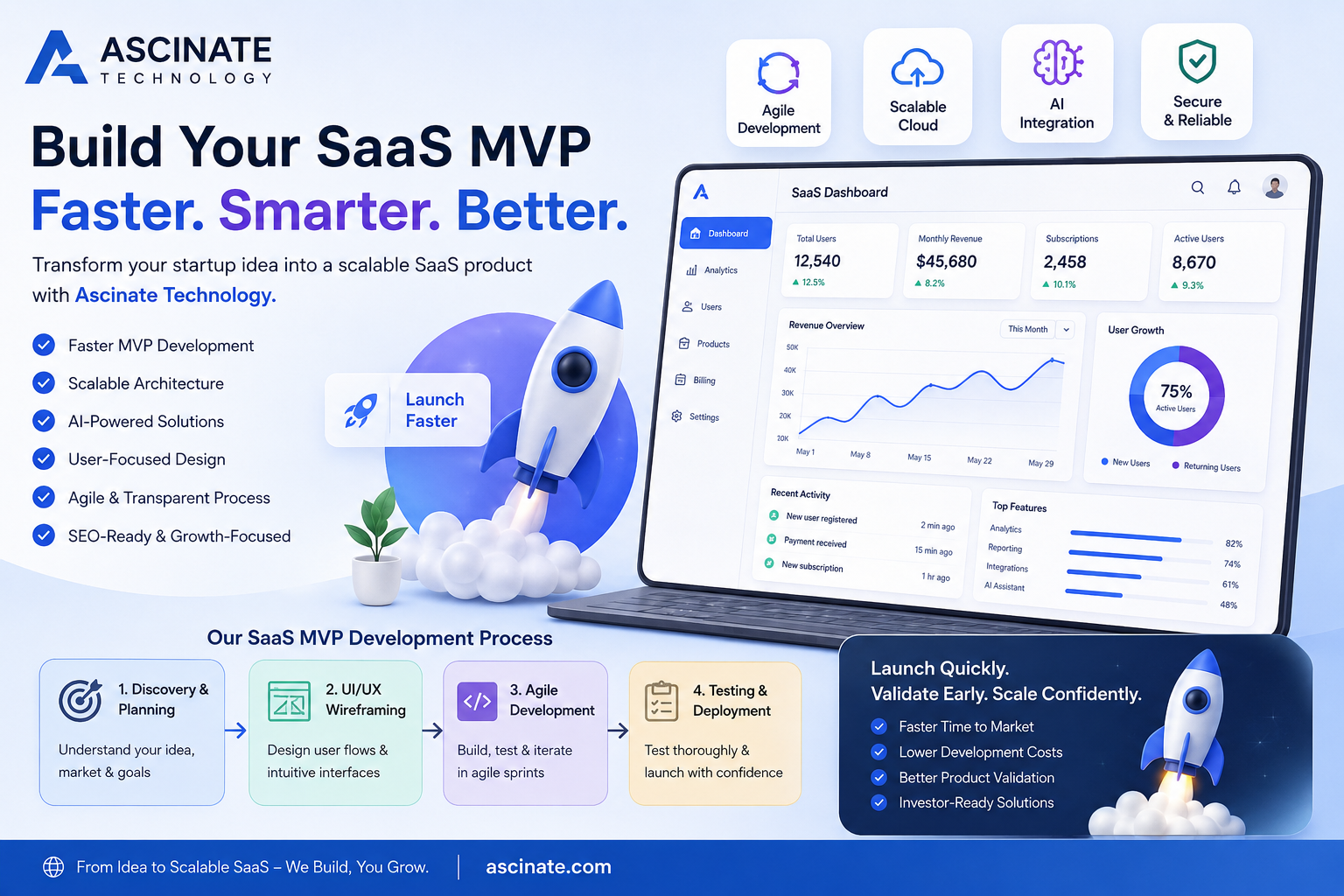
Launching a SaaS startup is exciting, but many founders face one major challenge: building a functional MVP quickly without overspending. In today’s competitive startup ecosystem, businesses need to validate their ideas fast, reduce development risks, and launch scalable products efficiently to stay ahead in the market.
1. Why SaaS MVP Development Matters
A Minimum Viable Product (MVP) allows startups to launch a simplified version of their software with only the most essential features. This helps founders test market demand, gather user feedback, and improve the product before making larger investments.
2. Faster Product Validation
Building an MVP helps startups validate business ideas faster by putting a real product in front of users quickly. Instead of spending months developing unnecessary features, businesses can focus on solving core customer problems first.
3. Reducing Development Costs
One of the biggest advantages of an MVP approach is cost efficiency. By prioritizing only essential features, startups can reduce development expenses, avoid wasted resources, and manage budgets more effectively.
4. Choosing the Right Tech Stack
Selecting the right technology stack is critical for SaaS MVP success. Modern startups often use scalable technologies like React, Node.js, Laravel, Python, and cloud-based infrastructure to ensure flexibility and future growth.
5. UI/UX for Better User Adoption
A clean and user-friendly interface plays a major role in SaaS product success. Strong UI/UX design helps improve customer experience, increase engagement, and encourage users to adopt the platform more quickly.
6. Scaling After MVP Launch
Once the MVP is launched and validated, startups can gradually add advanced features, improve performance, and scale the platform based on real customer feedback and business growth opportunities.