Custom CRM vs Salesforce vs Zoho CRM: Which Is Right for Growing Businesses?
July 08, 2026

Select a convenient time for a 30-minute discovery call
Our team will prepare for the call based on your requirements.
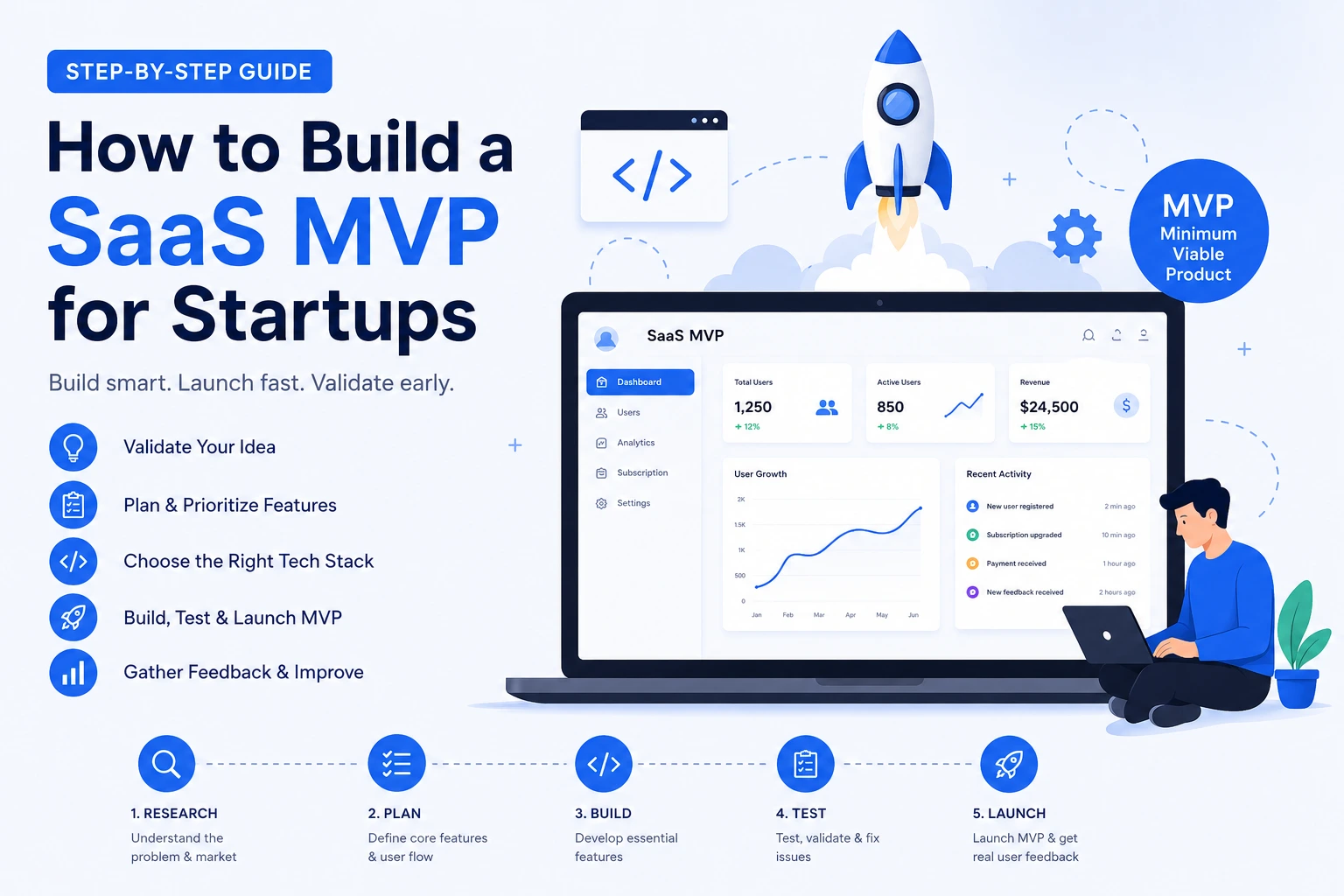
Building a SaaS MVP (Minimum Viable Product) is one of the smartest ways for startups to validate ideas quickly, reduce development risks, and launch products faster in today’s competitive digital market. Instead of investing heavily in a full-scale product from the beginning, startups can focus on creating a simplified version with essential features to test real user demand and gather valuable feedback.
Successful SaaS MVP development starts with proper planning. Startups need to identify their target audience, solve a specific problem, define core product goals, and prioritize only the most essential features required for the first launch.
Selecting the right technology stack plays a major role in building scalable and high-performing SaaS products. Modern startups often use technologies like React, Node.js, Python, Laravel, and cloud platforms to ensure flexibility, security, and faster development.
An MVP should focus only on features that directly solve the primary problem for users. Avoiding unnecessary functionality helps reduce development time, lower costs, and simplify product testing during the early stages.
A clean and intuitive user interface is essential for SaaS MVP success. Startups should focus on creating user-friendly experiences that improve engagement, simplify navigation, and encourage users to adopt the product quickly.
SaaS MVP development costs can vary depending on features, complexity, technologies, and development teams. Startups can reduce expenses by starting with a lean MVP approach and scaling gradually based on user feedback and market demand.
Launching an MVP allows startups to test their product in real market conditions, gather customer feedback, validate business ideas, and improve the platform continuously. This approach helps businesses make smarter decisions before investing in large-scale development.
Discover how AI can streamline your operations and improve patient care.