Custom CRM vs Salesforce vs Zoho CRM: Which Is Right for Growing Businesses?
July 08, 2026

Select a convenient time for a 30-minute discovery call
Our team will prepare for the call based on your requirements.
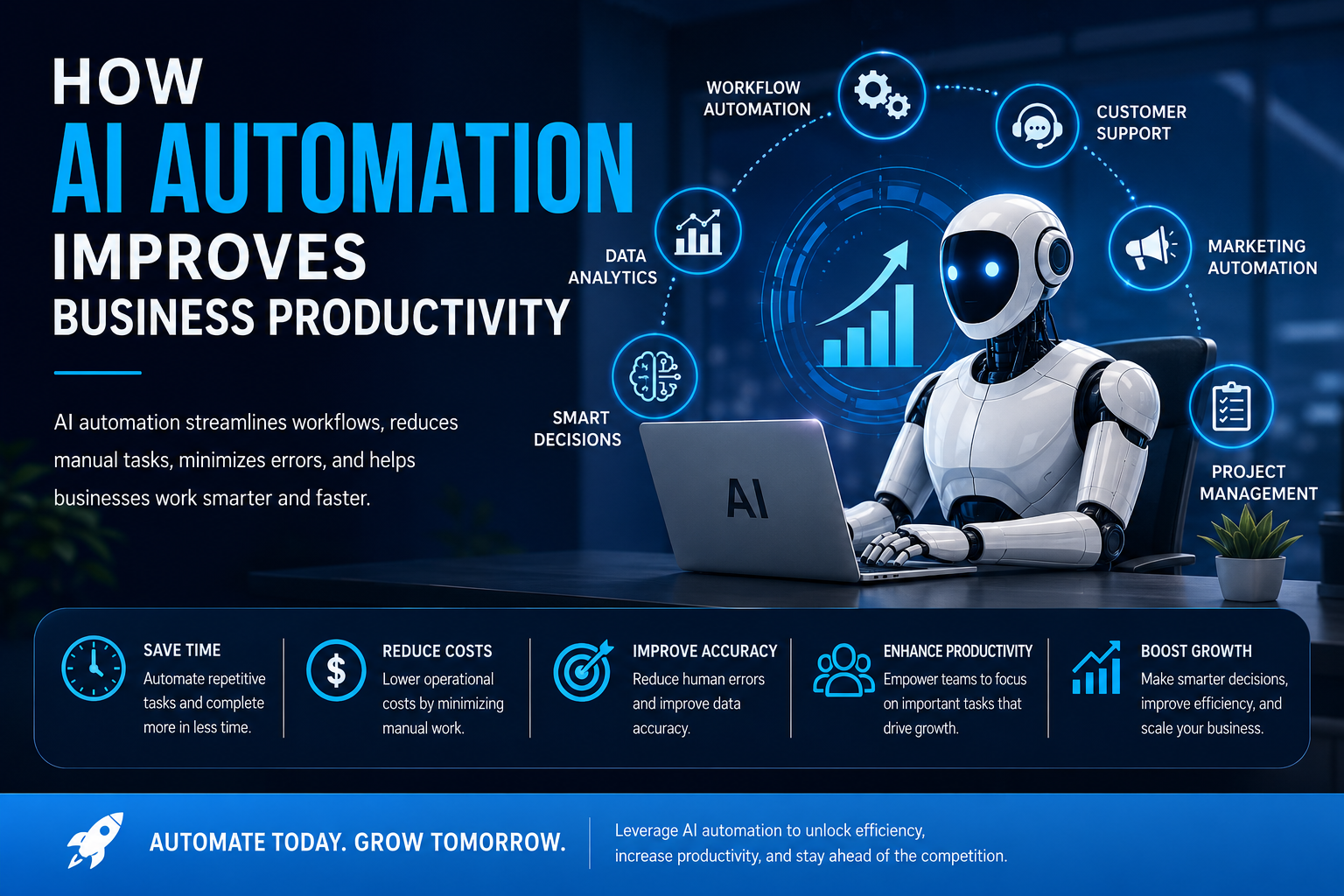
Businesses don’t lose productivity because employees aren’t working hard — they lose it because too much time is wasted on repetitive tasks, manual workflows, and slow communication. In 2026, AI automation is helping companies eliminate these inefficiencies and operate faster, smarter, and more efficiently than ever before.
AI-powered systems can automate routine tasks such as data entry, scheduling, reporting, customer follow-ups, and workflow management. This reduces manual effort and allows teams to focus on more strategic and high-impact work. Businesses looking to implement these solutions can benefit from AI Automation Services UK and AI Automation Services USA to streamline daily operations.
Manual processes often lead to mistakes that can affect productivity and business performance. AI automation helps minimize human error by handling tasks with greater accuracy, consistency, and speed.
AI chatbots and automated communication systems improve response times by providing instant support and faster information processing. Businesses can deliver better customer experiences while reducing operational pressure on support teams.
By automating repetitive operations, businesses can increase overall team efficiency and productivity. Employees spend less time on routine tasks and more time on innovation, creativity, and business growth initiatives. Industries such as healthcare are already seeing significant productivity gains through AI Automation for Healthcare.
From marketing automation and data management to operational workflows, AI helps businesses streamline processes and make faster, data-driven decisions. This leads to improved performance and more scalable operations. AI-powered solutions are also transforming sectors such as property management through AI Automation for Real Estate.
The future of business productivity is not about working longer hours — it’s about working smarter with AI automation. Companies adopting AI technologies are gaining a competitive advantage through increased efficiency, reduced costs, and faster business growth. Whether operating in the UK, USA, healthcare, or real estate sectors, AI automation is becoming an essential tool for sustainable success.
Discover how AI can streamline your operations and improve patient care.